
by Diane M. Hinds, MA

Why Your Website Is the Foundation of Your Reputation


The Entertainment Bureau

Why Your Website Is the Foundation of Your Reputation

Diane Hinds, The Entertainment Bureau

As an Entertainment Publicist for the last 30 years, with the odd dabble in artist management and more, I've come to understand the true value of reputation. It's the currency of this industry: hard won, easily lost, and impossible to fake convincingly for long.

More recently, I've stretched myself into the tech arena, specifically, website design and development. This has given me a renewed insight into reputation management, because a website that converts is the best foundation upon which to build everything else.

The Cost of Neglect

I've worked with artists who neglect their website, leaving it to languish while they chase the next big break in their career. It's an odd contradiction: they'll spend months perfecting a single, rehearsing a tour, or building a brand deal, yet the one asset that works for them 24 hours a day, in every territory, without needing a flight or a visa, gets left to rot. An outdated site, broken links, or a “coming soon” page that's been “coming soon” for two years does real damage. It tells a visitor, whether that's a fan, a journalist, or a promoter, that this artist isn't serious, isn't active, or worse, isn't real.

Why a Website Matters

A website that converts brings with it ranking, engagement, and improved sales, as we've proven with at least two of our clients, ExpansionRecords.com and Panrecords.co.uk. But the value goes deeper than metrics.

Someone once said to me: your website is your brand. Think of it like Barclays Bank. That logo is trusted and respected, instantly recognisable, and carries decades of association with reliability. The same is true of brands like Coca-Cola and Campbell's Soup. Their logos are shorthand for something people already believe about them before a single word is spoken. A well-built website does the same job for an artist or a label. It's the visual and functional handshake that says, before you've even read a bio, “this is legitimate, this is professional, this is worth your time.”

More Than a Website: A Digital Ecosystem

In today's digital world, having a presence online isn't optional, it's the baseline. With a site that converts, our clients can focus their energy on the PR, whatever that looks like for them: a single or album release, a product launch, or a tour.

That website also does far more work than most artists realise:

  • An Electronic Press Kit (EPK) - giving journalists, promoters, and bookers everything they need in one trusted place, without chasing dropbox links or outdated PDFs.
  • A shop site - converting attention directly into revenue, rather than relying solely on third-party platforms that take a cut and own the customer relationship.
  • Your own Wikipedia - a definitive, self-controlled record of who you are, what you've done, and where you're going, rather than leaving that narrative to whoever writes about you first.

Where PR and the Website Meet

A press campaign brings eyes to your site, and this is precisely where trust becomes valuable. Every mention, every feature, every piece of coverage is effectively directing an audience towards a single destination. If that destination is slow, dated, or confusing, you lose the very people the PR worked so hard to attract. If it's sharp, credible, and easy to navigate, it converts that attention into something lasting: a fan, a sale, a booking, a follow.

Your site is a repository of valuable information, and increasingly, it's also the source material that search engines and AI tools draw on when someone asks “who is this artist” or “is this label legitimate.” Reputation management no longer stops at what's written about you. It extends to what your own platform says about you, and how well it says it.

That's the real shift I've seen over these 30 years: reputation used to live almost entirely in press cuttings and word of mouth. Now, it lives just as much in code, load times, and conversion rates. The publicist's job hasn't changed, only the tools have.

The Next Leap: AI That Works as Hard as You Do

Technology continues to raise the bar, and nowhere is that clearer than in Concierge AI, a multilingual chatbot we're now rolling out for clients. It means an artist, a label, or a business can communicate with their audience via text and speech, in that audience's own language, around the clock. A fan in Tokyo, a promoter in Madrid, or a journalist in São Paulo no longer has to wait for office hours or hope someone on the team speaks their language. The website itself becomes the conversation, not just the shopfront.

This is what a modern website is capable of now: not a static brochure, but an active, responsive extension of the brand, working while you sleep.

So, no one has an excuse not to have a website that works as hard as they do. Whether you're a wedding photographer, a football club, an author, or an SME, there's no excuse to look anything less than your best online.

The Entertainment Bureau  -  theentertainmentbureau.biz

by Diane

Was the Cross Really the First 'Brand'? Or Did the Sun Get There First?


Brand strategy · Perspective

Was the Sun the First Brand?

A reflection on symbols, meaning, and the deliberate work of building a brand that lasts.

Generate a dazzling image of the sun shining in its heavenly glory
The oldest symbols can still teach us something about modern brand building.

There is a claim that does the rounds in branding circles every so often: the cross was the first brand.

It is a neat line. A single symbol, recognised instantly across continents and centuries, carrying meaning far beyond its simple shape. On the surface, it ticks every box a brand strategist looks for.

If you are a Christian and hold to a creationist timeline, the claim can make sense on its own terms. But step outside that framing for a moment and a more interesting question appears: what if the sun was the first brand? Or the moon?


What Actually Makes Something a Brand

Before settling the argument, it is worth being precise about what a brand actually is, because "recognisable symbol" is not enough on its own. A brand is a symbol, mark, or name that carries consistent meaning, provokes a consistent emotional response, and is attached to an identity that someone is actively building and protecting over time. Recognition alone gives you a symbol. Recognition plus intent, narrative, and stewardship gives you a brand.

That distinction matters enormously here.

The Case for the Sun

Long before any human drew a cross in the sand, the sun was already doing what every great brand aspires to do. It was recognised instantly, by every person, in every culture, without exception. It carried consistent associations wherever it appeared: life, warmth, power, authority. Ancient Egypt built an entire religious and political structure around Ra. Mesoamerican civilisations organised their calendars, their agriculture, and their gods around it. The Japanese imperial line traces its legitimacy to a sun goddess. None of these cultures had contact with one another, yet they arrived independently at the same symbol carrying broadly the same weight.

That is remarkable consistency. It is also, arguably, the flaw in calling it a brand. The sun did not choose to mean life and power. Humans looked up, decided what it meant, and attached the story afterwards. A brand requires an author, someone shaping the meaning on purpose and defending it over time. The sun never did any shaping. We did the work and handed it the credit.

The Case for the Moon

The moon makes an even stranger case study, because its brand identity is more layered than the sun's. Where the sun is associated almost everywhere with constancy and power, the moon carries mystery, change, cycles, femininity, and time itself. It waxes and wanes, disappears and returns, and every culture that has ever looked up has built calendars, myths, and rituals around that rhythm.

If brand strength is measured by how much meaning a symbol can hold without losing coherence, the moon may outperform both the sun and the cross. But it suffers from the same problem as the sun: no author, no deliberate stewardship, no one actively managing what it stands for. It simply is, and we project onto it.

Where the Cross Actually Wins

Here is the argument in the cross's favour, and it is a stronger one than "it's recognisable." The cross was not just a symbol that pre-existed human meaning-making, the way the sun and moon did. It became a brand through deliberate authorship. A specific narrative was attached to it. Institutions then took that narrative and applied it with extraordinary consistency, across languages, geographies, and centuries, defending its meaning and adapting its presentation while keeping its core association intact.

That is not passive recognition. That is brand management, playing out over two thousand years, with remarkable discipline.

The Real Lesson

The sun and moon prove that universal recognition is possible without any strategy behind it at all. The cross proves that recognition sustained by deliberate narrative and consistent stewardship is what turns a symbol into something with lasting commercial and cultural power.

That is the version of this argument worth taking into any conversation about brand building. Recognisability is not enough, and neither is meaning that simply exists. What separates a brand from a symbol is intent, someone deciding what it stands for, telling that story consistently, and defending it over time.

Whichever one you believe came first, that is the part worth remembering.

Building That Kind of Brand

At The Entertainment Bureau, this is the work: not chasing recognition for its own sake, but building the narrative, consistency, and stewardship that turn a symbol into something people trust and act on. If your brand has the recognition but not yet the story behind it, get in touch at theentertainmentbureau.biz and let's build one that lasts.

by Diane

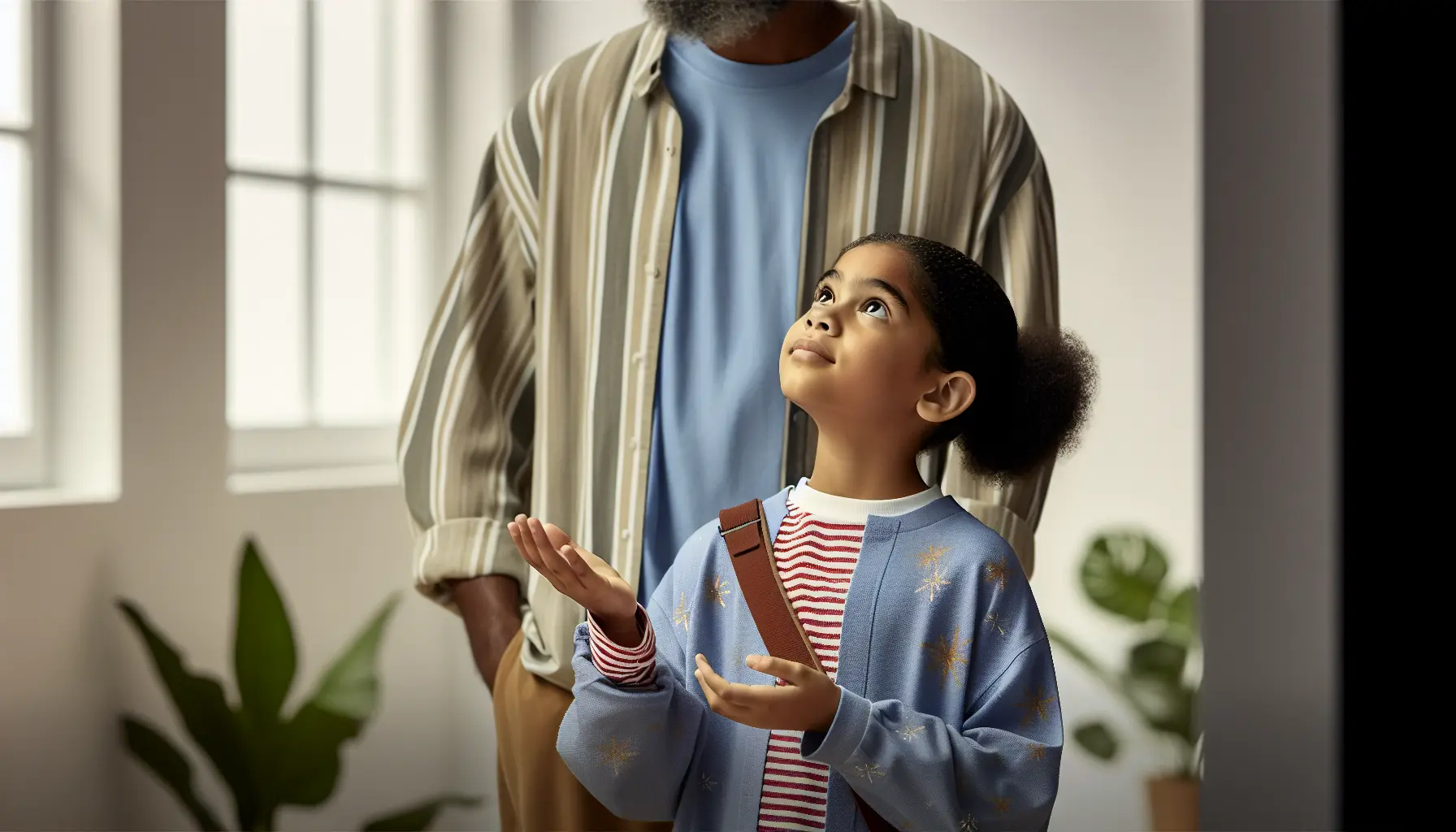
What a Child Asking for Money Can Teach Us About Branding and Keywords


Can you create an image of a mixed race girl, aged about 10, looking up at her parent asking for money?

It might surprise you to learn that one of the best examples of natural branding and keyword use comes from the least likely source: a child asking for money. Strip away the business jargon and you’ll find that many of the principles used in successful marketing campaigns are already being practised in living rooms across the world—by children who know exactly how to win over their target audience: their parents or guardians.

Understanding the Target Audience

Every smart campaign starts with audience research. Children intuitively understand which parent or guardian is most likely to say yes—or who has the softest heart, the biggest wallet, or the most flexible rules. They tailor their approach accordingly. If Mum responds well to good behaviour, she gets the “I’ve been so helpful today” speech. If Dad is a numbers guy, he gets a breakdown of how much things cost and why it’s “a really good deal.”

This is the first lesson in branding: know your audience. You can’t sell to everyone. Know who you’re talking to, understand their motivations, and shape your messaging around what matters to them—not just what you want to say.

The Power of Keywords

Next, let’s look at language. Children may not know what a “keyword” is, but they know what words to use to open the door to a yes. Terms like “responsible,” “grown-up,” “earn,” “save,” and “just this once” are powerful triggers. They’re emotionally charged, familiar, and linked to adult values—just like good SEO keywords are tied to what your audience is actually searching for.

These words aren’t used randomly either. Children pick them based on past results—just like marketers learn from previous campaign data. And they repeat them. Often. Keyword consistency, just like in SEO and branding, builds familiarity and trust.

Personal Branding in Action

Children also create a temporary “brand” to support their campaign. This could be the “I’m mature now” persona or the “helpful angel” phase. The brand identity is expressed through actions—like doing chores unasked, being unusually polite, or suddenly showing interest in the parent’s day.

It’s not all that different from a business adopting a consistent brand tone, visuals, or mission statement to win over a customer base. They’re showing, not telling. The child doesn’t just say, “I’m responsible”—they perform it. This is crucial. In branding, perception is everything.

Strategic Timing

Any seasoned parent will tell you: timing is everything. A child knows not to ask for money when their parent is stressed, tired, or distracted. They wait until the mood is right, the atmosphere is calm, and their efforts are most likely to be received positively. That’s strategic launch timing—something every brand should consider when releasing new products, running a campaign, or announcing updates.

Persistence Pays Off

Finally, children are not afraid to repeat the message. Not in an annoying way (well, sometimes), but in a persistent, almost strategic loop. They understand that the first “no” might not mean “never”—it might just mean “not yet.” They follow up. They remind. They adapt. In marketing terms, they’re running a retargeting campaign.

The Takeaway

So, what does a child asking for money really teach us? That branding and keyword use aren’t exclusive to corporations or marketing agencies. The core principles—knowing your audience, using the right language, building a trustworthy image, choosing your timing, and staying consistent—are universal. Whether you’re running a full-scale brand campaign or just trying to boost visibility online, remember: if a child can craft a persuasive, emotionally resonant pitch without any formal training, so can you. All it takes is clarity, consistency, and a little bit of charm.

Diane

by Diane

Demise of the Business Landline: Losing the Art of Communication


The Demise of the Business Landline: Are We Losing the Art of Communication?

In the age of rapid technological advancements and the rise of digital communication platforms, traditional business landlines are becoming a thing of the past. With the proliferation of smartphones, instant messaging, and email, the way we interact with each other has evolved dramatically. However, this evolution comes with its set of challenges, as the decline of voice-to-voice communication may have some unintended consequences. In this blog post, we explore the impact of the vanishing business landline, the reluctance of millennials to use traditional phone calls, and the message we may inadvertently be sending to each other: "I don't want to talk to you."

The Disappearing Business Landline

Once an essential tool for conducting business, the iconic business landline was the backbone of communication for decades. It provided a reliable and direct means of reaching colleagues, clients, and partners. However, with the rise of digital alternatives, such as Voice over Internet Protocol (VoIP) systems and mobile phones, the business landline has steadily declined in popularity.

The Rise of Digital Communication

Today's business landscape is dominated by email, instant messaging apps, and video conferencing tools. These digital alternatives offer unparalleled convenience and efficiency, allowing for quick exchanges of information and the ability to connect with people from all over the world in real-time. As a result, phone calls are often reserved for more critical or time-sensitive matters, while casual interactions have shifted to text-based platforms.

The Impact of Millennials

One of the most significant contributors to the decline of business landlines is the generational shift. Millennials, who make up a considerable portion of the workforce, have grown up in a digital age. They are accustomed to the ease and immediacy of texting and online messaging. For them, phone calls may feel intrusive, time-consuming, or simply outdated. (https://www.euruni.edu/blog/the-mute-generation-why-millennials-do-not-pick-up-their-phones/)

While millennials have been instrumental in driving technological advancements and shaping the modern workplace, their aversion to phone calls has implications for interpersonal communication within a business setting. A reliance on text-based communication might inadvertently lead to misunderstandings, misinterpretations, and a lack of emotional connection.

Losing the Art of Communication

Voice-to-voice communication is a unique art that goes beyond mere words. It enables us to understand nuances, tone, and emotions, facilitating more profound connections with our colleagues and clients. Phone calls allow for spontaneous brainstorming, prompt decision-making, and the building of trust between parties.

By moving away from phone calls and favoring written communication, we may be missing out on these crucial elements. There's a certain warmth and human touch that comes with speaking directly to someone, which can foster camaraderie and understanding that might be challenging to achieve through text alone.

The Message We're Sending

The shift away from traditional phone calls in business may inadvertently convey the message, "I don't want to talk to you." Although this may not be the intent behind the preference for digital communication, the consequences remain the same. Colleagues or clients may feel less valued or important if their interactions are relegated to impersonal emails or messages.

Moreover, the decline of business landlines can impact customer service experiences. Automated phone systems and chatbots, while efficient, can be frustrating and alienating for customers seeking personalised assistance.

The Long-Term Consequences

In the long term, the diminishing use of business landlines and voice-to-voice communication could have far-reaching consequences. As the workforce becomes increasingly remote and global, maintaining strong personal connections is vital for fostering a cohesive and collaborative work environment.

Reversing the Trend

While the demise of the business landline may seem inevitable, there are steps we can take to preserve the art of communication:

1. Encourage Phone Call Etiquette: Emphasize the importance of voice-to-voice communication for meaningful conversations and relationship-building.

2. Use Calls for Complex Issues: Reserve phone calls for complex matters that demand nuanced discussion or for providing excellent customer service.

3. Balance Digital and Traditional: Find a balance between digital and traditional communication methods to suit different situations and preferences.

4. Develop Soft Skills: Invest in training programs that help employees develop active listening, empathy, and effective communication skills.

As the business landline fades into oblivion, it's essential to recognise the significance of voice-to-voice communication. While digital platforms offer unmatched convenience, we mustn't underestimate the value of direct interaction. By striking a balance between modern technology and traditional communication, we can foster stronger connections and maintain the art of communication in the evolving business world.